Tea Manufacturing
FROM THE LEAF TO THE CUP
Although the following steps ensure the systematic manufacture of tea, the skill of the teamaker is crucial, as it is he who decides the exact timing, level and extent to which each step is executed, based on his experience and what kind of tea he finally wants. This is a process that comes with practice, knowledge and experience and cannot be merely replicated by anyone.
The Tea Maker’s role is therefore a vital one.
Sri Lanka’s tea cultivators and manufacturers are the custodians of the traditional, orthodox method of black tea production. This is still agreed by most experts to produce the best black tea. Even with the technological improvements introduced over the last half a century, the orthodox method is relatively slow and labour-intensive; but as the tea planters and traders of Sri Lanka have always maintained, good tea cannot be hurried. Nor, oddly enough, can it be delayed. The time devoted to each of the processes of tea manufacture must be finely judged if a quality product is to be obtained. This is a matter of the tea-maker’s judgment, for the right timing depends on the moisture content of the plucked leaf, the temperature and humidity conditions prevailing over the period of manufacture, and a variety of other factors. Although the process of making fine black tea is simple in its essentials, expertise, experience and a ‘feel’ for the task are essential to success.
Plucking
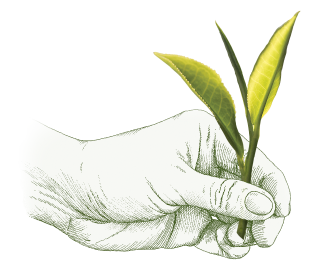
The manufacturing process commences when the leaves are picked or ‘plucked’. Plucking calls for discrimination and dexterity and is carried out mainly by women. Only the uppermost foliage on every stem is picked – the famous ‘two leaves and a bud’ – and the stem itself must be left undamaged. Fiddly work, but a skilled tea-plucker can collect up to 20kg. (44lb.) of leaf daily.
Weighing
On arrival at the factory, the raw leaf is weighed. The total weight recorded for the day’s batch provides a benchmark for quality assessment at the end of the process of manufacture. After weighing, the tea is laid out for withering.
Withering
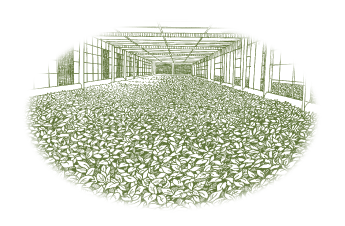
The raw leaf is ‘fluffed’ and spread out to dry on racks or troughs in a well-lit and ventilated space. It will lie here for 18-24 hours, slowly losing moisture and undergoing physical and chemical changes essential to manufacture. Over-withering can be fatal, so the process is carefully monitored. It is complete when about two-thirds of the moisture present in the raw leaf has evaporated.
Rolling
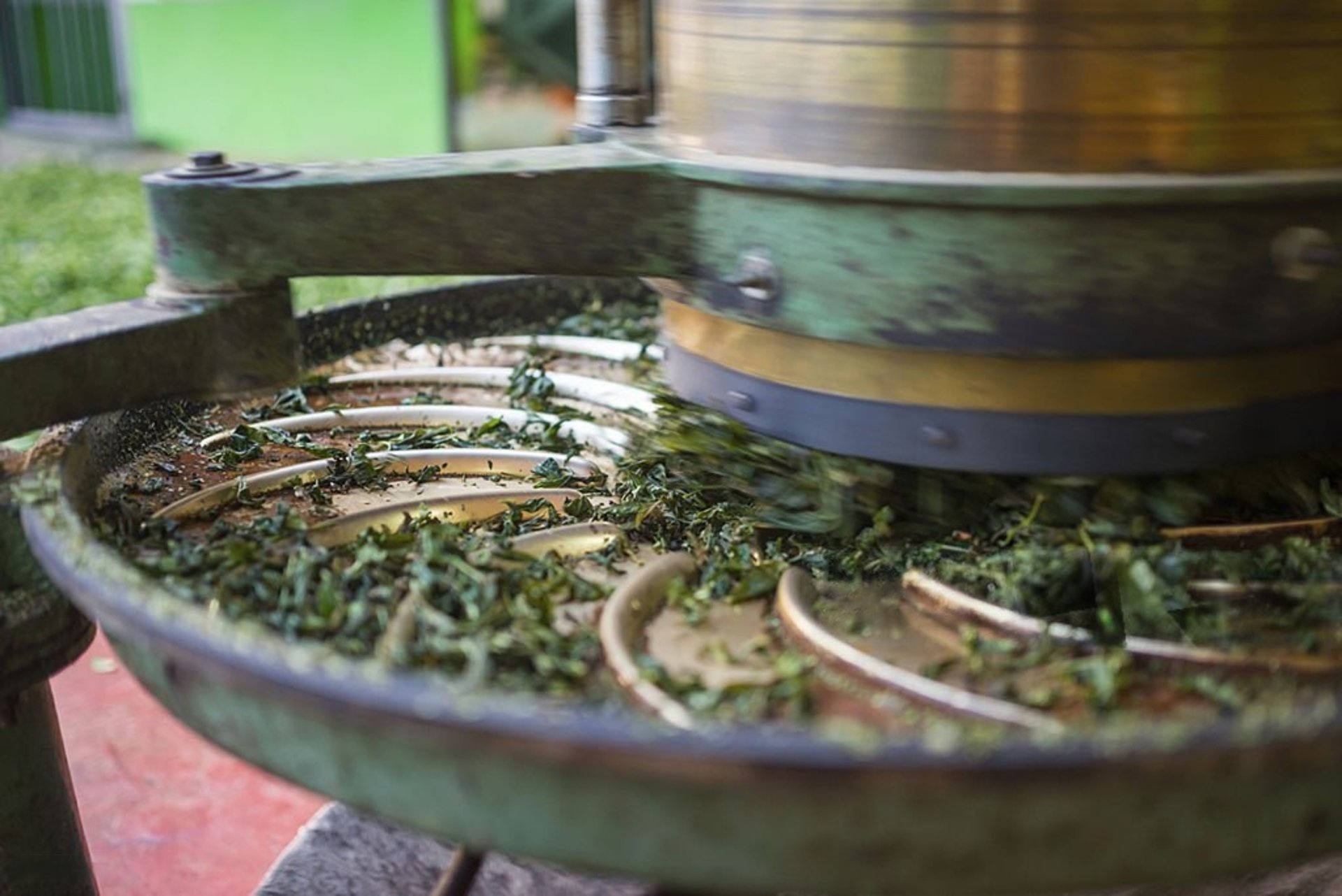
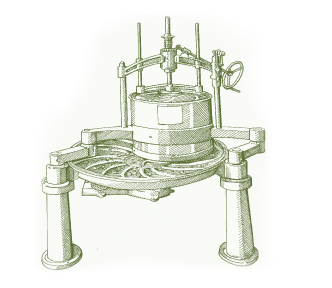
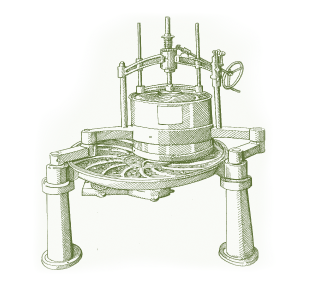
The withered leaf is now ready for rolling. This is a mechanized process in which the leaf cells are ruptured to release enzymes and bring them into contact with air so that aeration can commence. The bits of broken and rolled leaf are called dhools. The dhools are then broken up and sifted before aeration.
Aeration
During this critical stage of manufacture, important chemical reactions take place through the action of air on the leaf tissue. The rolled, broken leaf is spread out on tables and exposed for a period that varies between 20 minutes and five hours, depending on a variety of factors, including what kind of final product is desired. The withered tea leaf is a rusty, coppery orange colour. Again, timing is critical: under-aerated tea tastes raw and green, over-aerated tea is soft and tasteless. Aeration is also sometimes known as ‘fermentation’ or ‘oxidation’.
Drying
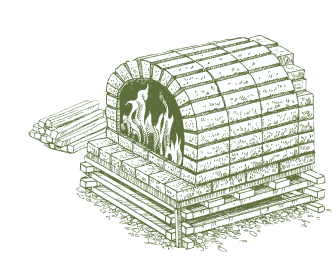
When the right amount of aeration has occurred, the leaf is dried in a desiccator or ‘firing chamber’ at 99-104˚C (210-220˚F) to prevent further chemical changes. This shrinks and darkens the leaf, resulting in the product known as black tea. This completes the actual manufacture.
Grading
The size of the leaf particles in your teapot bears no relation to quality per se, but it does affect the colour and strength of the brew. Manufactured tea is graded by leaf size using a mechanical sifter. ‘Leaf’ grades contain the largest pieces, ‘broken’ grades are successively smaller, while the smallest grades of all are known as ‘dust’. Larger grades tend to command higher auction prices.
Tasting and Assessing
The made tea is then tasted and assessed by the Teamaker and expert tasters, to ensure it meets all quality standards in terms of leaf appearance, aroma, cup colour and character of the tea.
Bulk Packing
To ensure consistency of appearance, flavour and quality, each grade of a particular consignment is thoroughly stirred up and mixed together. After this, the tea is bulk-packed – either in the traditional wooden chests (in former times these were lined with lead) or in more modern aluminum-lined paper sacks.
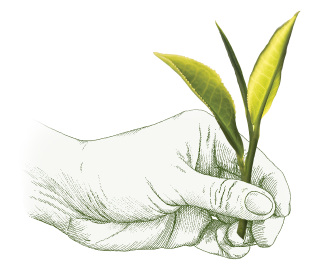

Do you know, that approximately 4.5 kg of fresh tea leaves are typically needed to manufacture 1 kg of Black Tea
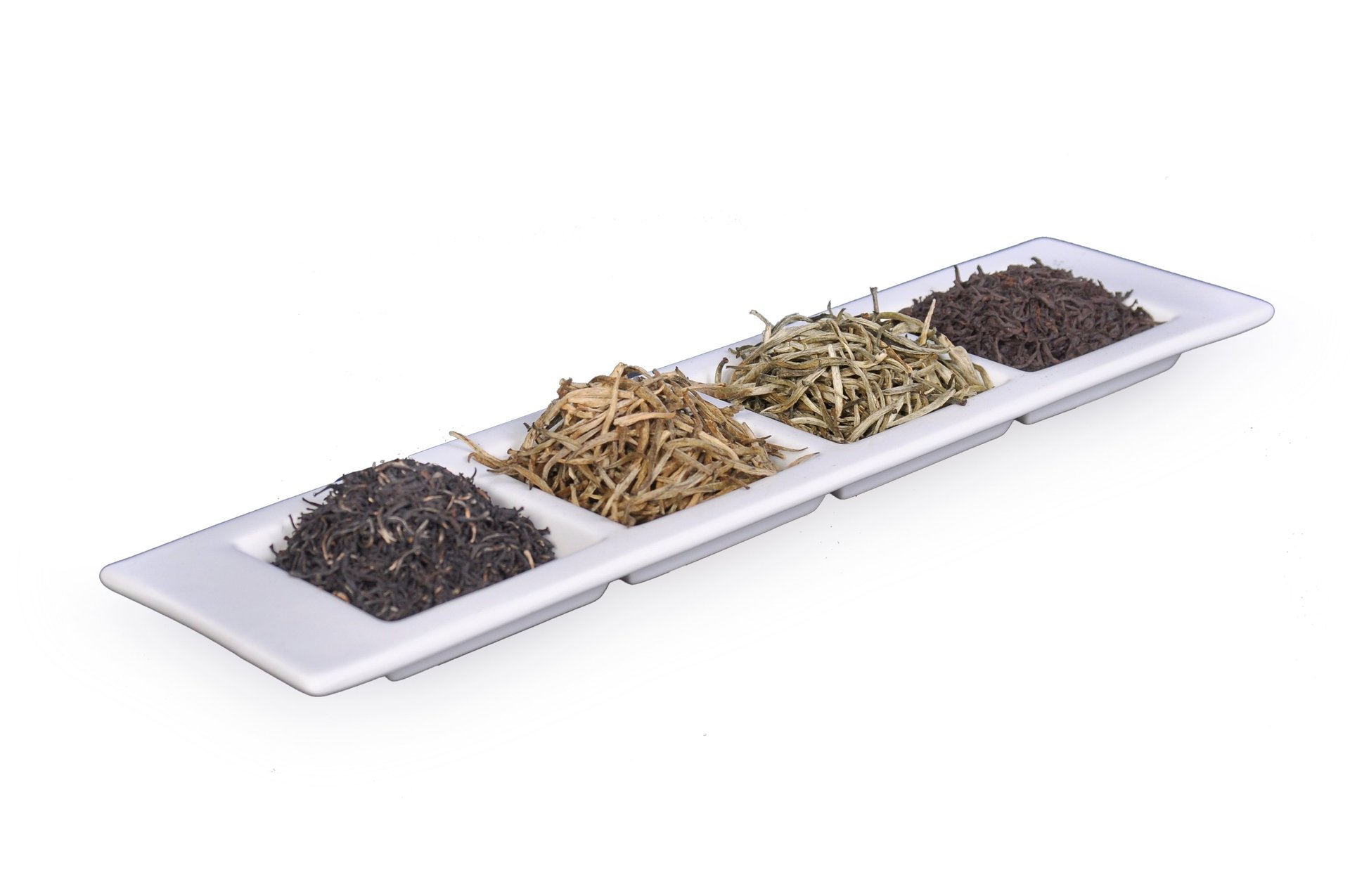
Tea Tasting
Tea tasting, much like wine tasting, uses similar steps – visual, smell, taste and touch. A lot about a tea can be told by examining the dry leaves. Gently press some dry leaves in your hand – most new teas are a little springier and less likely to crumble than older teas. Tea tasting is the process in which a trained taster determines the quality of a particular tea. Due to climatic conditions, topography, manufacturing process, and different clones of the Camellia sinensis plant (tea), the final product may have vastly differing flavours and appearance. These differences can be tasted by a trained taster in order to ascertain the quality prior to sale or possibly blending tea.
It is the taster who describes and values tea. His description of the liquor is based on taste. In its widest sens which includes aroma, taste is a very complex property that has so far not been assessed chemically.
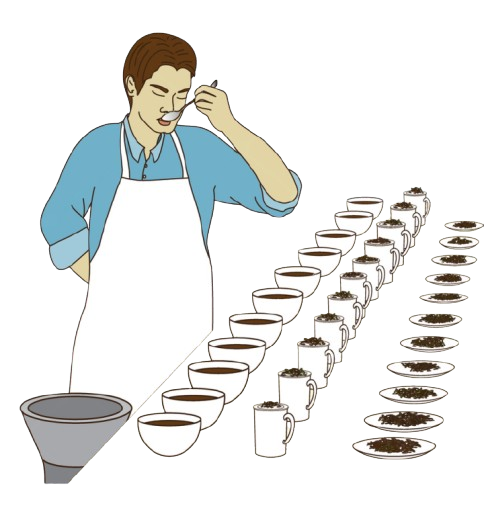
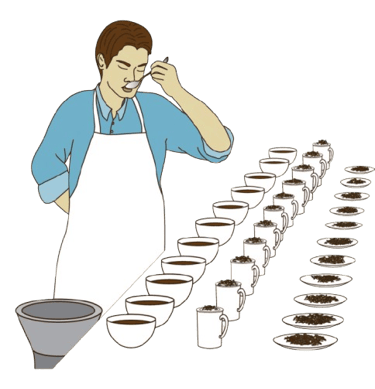
A taster may deal with several hundred tea samples in a day. In making his evaluation, he brings his knowledge and experience of the outturn of a particular estate to bear upon his conclusions. A 3-5 minute brewing time and boiling water is recommended for black tea and green teas are usually brewed at < 90 °C and for under 3 minutes. A tea taster uses a large spoon and noisily slurps the liquid into his/her mouth - this ensures that both the tea and plenty of oxygen is passed over all the taste receptors on the tongue to give an even taste profile of the tea.
While it is mainly the tongue that experiences taste, other surfaces of the mouth also play a role here. There are four kinds of tastes - salt, sour, sweet and bitter. Sweetness is tasted at the tip of the tongue, and bitterness at the back. Saltines too are tasted at the tip, but also at the sides of the front of the tongue. Sourness is experienced at the back edges. A stringency or pungency is a sensation, not a taste that is felt on the gums and part of the cheek. When the liquor is swirled round the mouth, the thickness, body or viscosity is felt and judged. For tasters, "infused" leaf refers to the wet leaf left over after the liquor is drained out; "infusion" refers to the liquor. The flavour characteristics and indeed leaf colour, size and shape are graded using a specific language created by the tea industry to explain the overall quality.
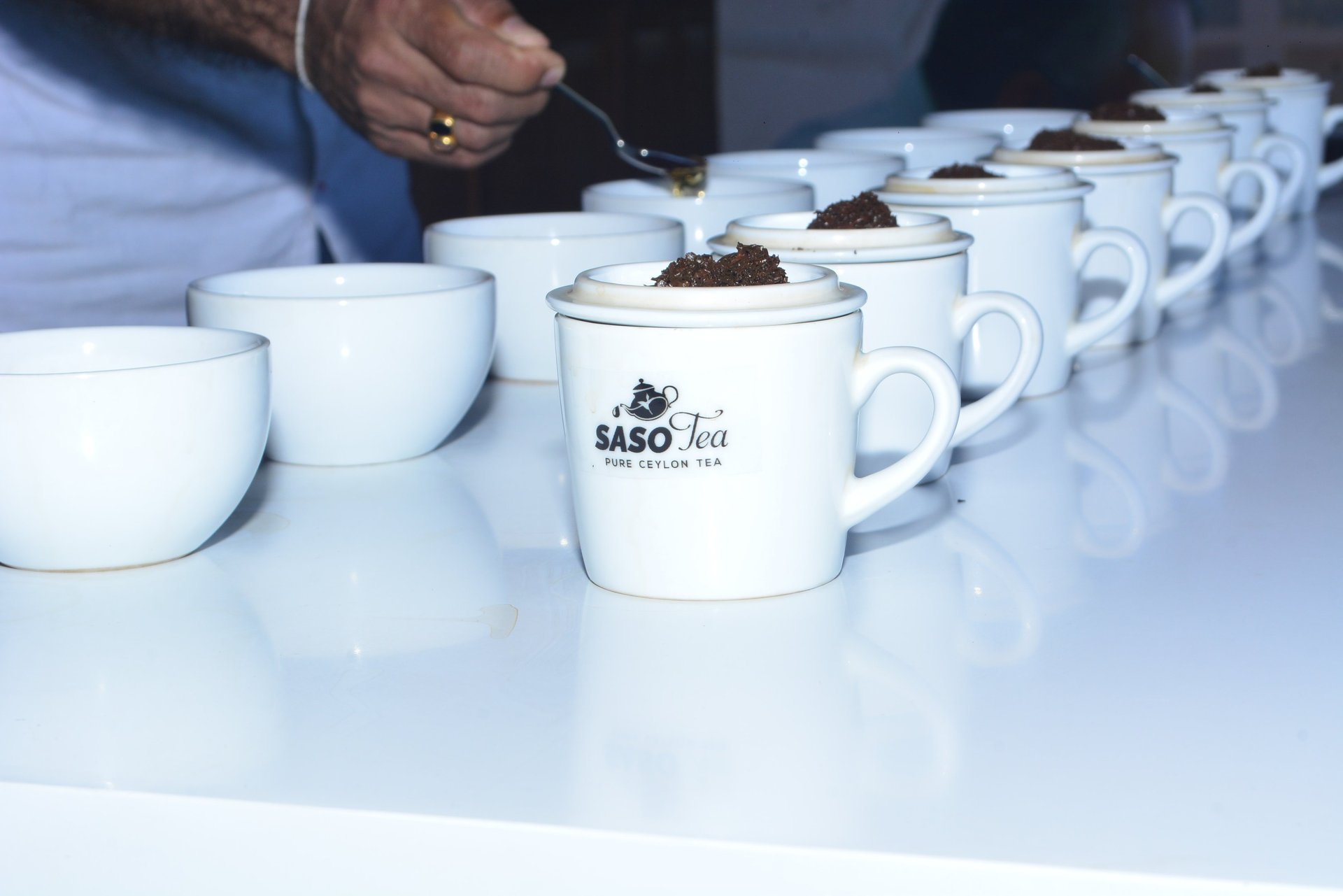
The tasting process includes measuring a level teaspoon of each sample into the cup. Generally, white or clear cups are used to view the truest colour. It commences by analyzing of the infused leaves as the cups are filled. Smaller flat leaves will show more body than larger twisted leaves, which take longer to steep. After steeping take in the aroma of the tea and examine the infused leaves for colour and evenness. Colour does not necessarily indicate the strength or body of the liquor.
Tea tasting is a precise skill and one that can be performed only with a good natural palate and active olfactory nerve. Apart from tasting and describing tea, the ability to value a tea calls for long experience and knowledge.
Contact us:
SASO TEAS (PVT) LTD,
No. 54,Gangoda Road,
Pilimathalawa, Kandy,
Sri Lanka.
Phone
info@sasoteas.com
+94 - 81 31 33 663
© 2025. SASO TEAS (PVT) LTD - All rights reserved.
+94 - 70 61 33 663
+94 - 77 6107465
Orthodox Hand-made Ozone Friendly PURE CEYLON TEA Organic Lion Logo Decaf Tea Tasting Ethical Rain forest Alliance White Black Green Fair Trade ISO certified